Seed fall and early germination
Longleaf seeds typically fall in autumn. Longleaf Alliance materials describe seed fall as occurring from October into late November, with seeds often not traveling far from the parent tree because of their size. Seeds are high in fats and can be quickly eaten by wildlife.
The “grass stage”: growing roots first
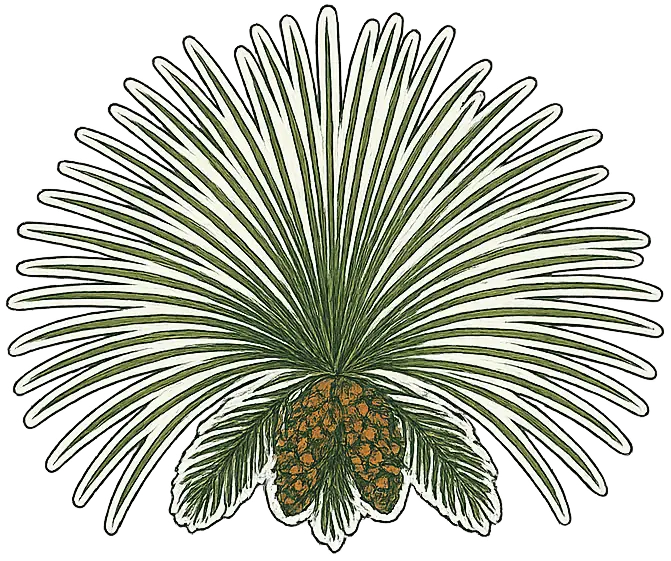
The grass stage is the longleaf pine’s signature. Longleaf Alliance descriptions note that a young longleaf can look like a clump of grass, because it doesn’t invest in height at first. Instead, it builds an impressive root system underground.
During this stage, a thick cluster of needles protects the growing tip (bud) at ground level. If a fire passes through, needles may burn, but the bud can remain protected and quickly produce new needles. Longleaf seedlings in grass stage are notably resistant to fire damage.
How long does grass stage last?
The Longleaf Alliance notes grass stage can last anywhere from about 1 to 7 years depending on competition and conditions, with rare documented cases lasting up to 20 years.
“Candle” growth, bottlebrush, and sapling
Once the root collar diameter reaches about 1 inch, Longleaf Alliance materials describe longleaf initiating height growth. In late winter into early spring, a white growing tip (“candle”) rises above the needle tuft and can gain a few feet in a few months. Needles emerge and the stem begins forming bark, creating the classic “bottlebrush” look.
After the bottlebrush reaches roughly 6 to 10 feet tall, lateral branches begin to form and the tree enters a sapling stage. Longleaf Alliance materials note height growth can reach about 3 feet per year under good conditions.
Maturity and longevity
Longleaf takes time, but it rewards patience. Longleaf Alliance resources note that around 30 years after height growth begins, longleaf pines may start producing cones with fertile seeds. As stands mature, lower limbs can be pruned by fire, producing tall, straight trunks.
Historical accounts cited by The Longleaf Alliance describe mature longleaf exceeding 120 feet in height and about 3 feet in diameter. They also note that some old-growth longleaf can increase growth rates at 200+ years when resources become available.