What a “good” longleaf stand looks like
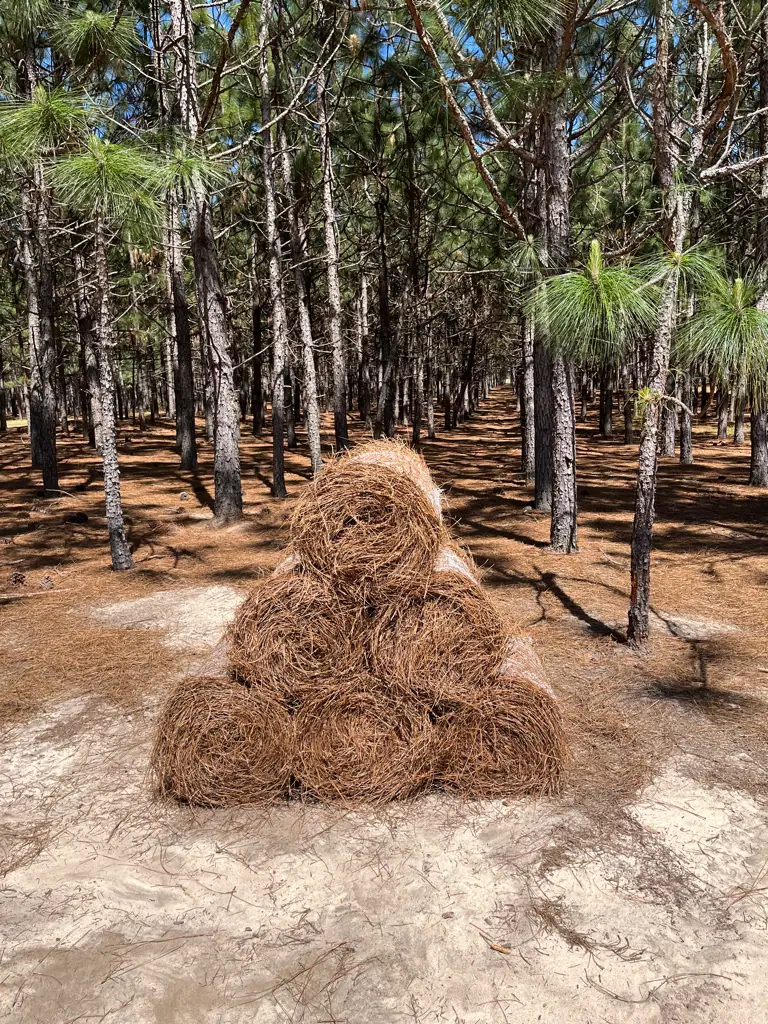
The Longleaf Alliance lists several core traits of mature, well-managed longleaf stands. In plain terms: longleaf tends to be open, sunny, and supported by fire.
- Dominated by a single overstory tree species: longleaf pine.
- Little midstory clutter—fewer shrubs and small trees blocking views.
- A well-developed ground layer dominated by bunchgrasses and other flowering plants.
- Wildlife species that rely on open pine forests.
- Frequent fire that maintains a park-like structure.
- Occurs across multiple habitat types, not just one landscape.
Why groundcover is the “engine”
In longleaf systems, the most visible biodiversity is often at your feet: grasses and wildflowers. That ground layer provides habitat, supports pollinators, and creates the fine fuels that carry low-intensity fire. If you want a deeper dive, see Groundcover Restoration.
Carbon storage over long timeframes
The Longleaf Alliance notes that longleaf pine is longer-lived than many other southern pines and can sustain growth at older ages (150 years or more). That longevity provides an opportunity to store carbon over long periods.
Next steps
Fire is a core process in longleaf. Start here: Built by Fire. Then explore the many settings longleaf can occupy: Habitats.