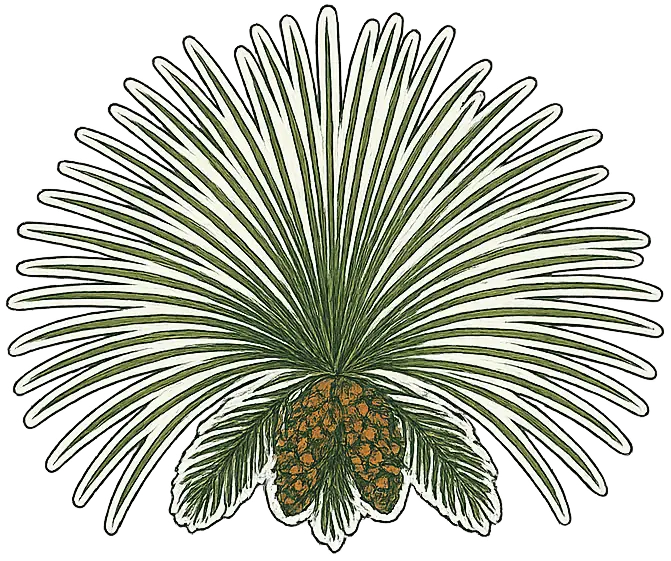
Needles: long, evergreen, and packed in threes
Longleaf pine is named for its needles. Longleaf Alliance materials describe longleaf needles as evergreen, typically about 8 to 17 inches long, and “fascicled” in groups of three. Needles persist for roughly two growing seasons before shedding.
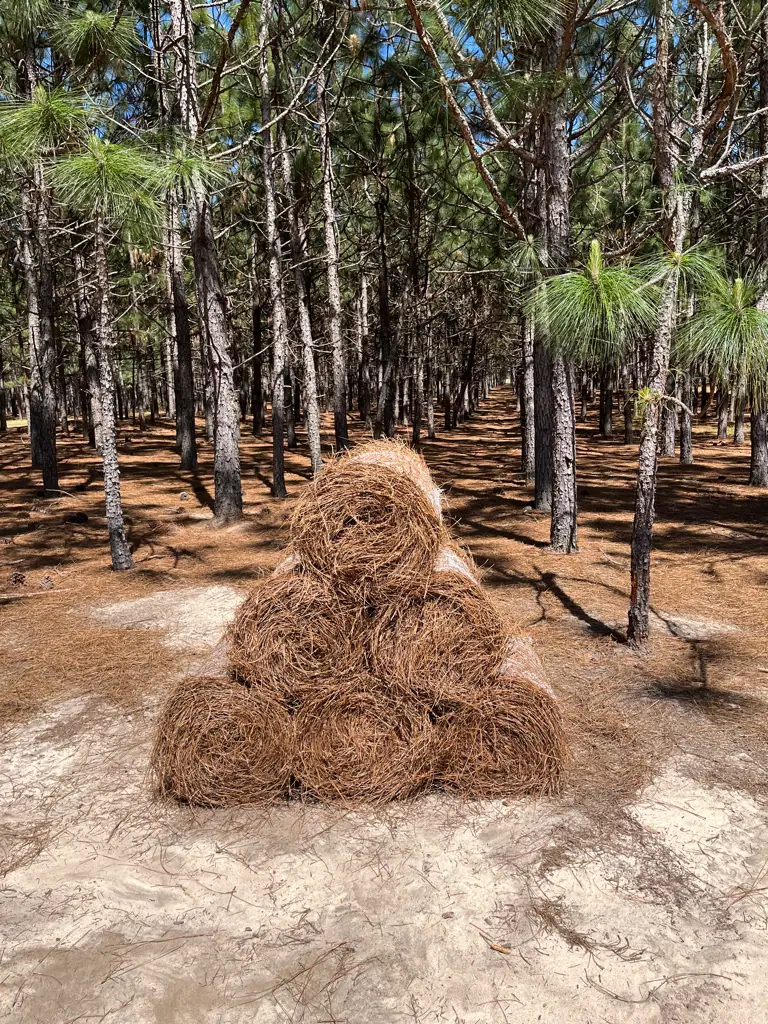
Once on the ground, those needles can be slow to break down. Frequent fire can easily ignite the dried needle layer and keep the forest floor open. In landscaping, fallen needles are gathered as “pinestraw” and used as mulch because of their length and color.
Cones: among the largest southern pine cones
Longleaf cones are big and prickly. Longleaf Alliance resources describe them as the largest southern pine cones, commonly ranging from about 5 to 12 inches long. Longleaf is monoecious (male and female cones on the same tree), and the reproductive cycle takes more than two years, with mature cones opening and seeds falling in October and November.
Seed production is not consistent every year—good seed crops can be infrequent—so timing matters when managers plan natural regeneration.
Bark: built for frequent surface fires
Thick bark is one reason longleaf does well in frequently burned systems. Longleaf Alliance descriptions note that thick bark generally protects the tree from many surface fires, and old fire scars can remain visible. Those scars can also create nesting opportunities for wildlife.
Roots: underground value for ecosystems
Longleaf roots hold stored energy and nutrients. Longleaf Alliance materials note that longleaf roots can be attractive to wildlife, and root foraging can be especially damaging to young trees. When a longleaf dies and roots decay (or burn out), the remaining voids can create underground tunnels used by a variety of organisms.
Connecting it back to pine straw
Those long needles are exactly what customers love for mulch. If you’re in Columbia, SC or nearby, we can deliver and install premium longleaf pinestraw.